Ep.25 – Bolivia

Hello!

Our time in Bolivia, or the land of extremely high altitude! We saw the world’s largest collection of dinosaur footprints in Sucre, visited the iconic salt flats of Uyuni and explored the highest navigable lake in the world; Lake Titicaca in Copacabana.

Don’t forget to watch in 1080p!

Sophie & Dave

Copacabana, Bolivia

La Paz & Copacabana – Bolivia

Hello,

We left Uyuni on an overnight bus to La Paz, situated at 3,650 metres above sea level making it the highest capital city in the world. Technically speaking, there’s contention between La Paz and Sucre as to which is the official capital of Bolivia: whilst all of the governmental buildings are now hosted in La Paz, officially Sucre is still the constitutional capital and holds judicial powers.

Unfortunately, both of us got quite ill while on the tour of the salt flats so our first couple of days in La Paz were spent sat on the toilet. Dave, annoyingly, seemed to be back to normal the following day. Me on the other hand seemed to only deteriorate and so began three weeks of hell! Even though we stayed in La Paz for so long, it was probably one of the places we explored the least! After a couple of days of persistent fevers and not being able to keep anything down, we decided it must be something more than food poisoning due to the severity so headed for the nearby private health clinic. The doctor diagnosed a stomach infection, injected me in the bum, gave me a course of antibiotics and a strict diet of bland foods for the next 6 days.

After the week of antibiotics it was evident that it hadn’t really made any difference as I was still bed-bound with the fever and so perhaps it was something else entirely. We headed back to the hospital and this time we were attended to by a young male doctor dressed in batman scrubs (it was Friday after all). This time the doctor seemed much more thorough and after tests, diagnosed a parasitic infection which he said was often missed with a stomach infection initially. By this point, the doctor said I had to be put on an IV drip for an hour. I also got an anti-nausea injection to help stomach the first pill in the course of extremely strong anti-parasite drugs.

By this stage we had moved into an apartment so that we were able to cook in for my specific bland diet. Whilst I was recovering, Dave decided to go on the free walking tour with HanaqPacha. The most interesting part he said was that witch doctors were still prevalent in Bolivian culture and often perform rituals. He said that whilst visiting the witches market, located behind the San Francisco Church, they were told that the Yatiri (witch doctors) commonly sell dried baby llama foetuses as they are used for ceremonial purposes. The foetuses are buried under the foundations of a house as a sacred offering to their goddess. Apparently almost all builders will refuse to work on a property until such a ritual is performed! It is also compulsory that the baby llama died from natural causes, most commonly hypothermia, in order to bring the good luck.

The tour’s other main talking point was the Mi Teleferico, or cable cars. As the city suffers notoriously from bad traffic congestion, the government enlisted the help of an Austrian company in 2014 to help create an aerial cable car transport system linking neighbouring city El Alto situated 400 metres above La Paz on the highlands. It is estimated that over 80,000 people make the journey between the two cities on the cable cars everyday. The cable cars made for an interesting landscape, sort of like an out of place/climate ski resort! The tour guide also said that a few years ago, two of the major banks declared themselves bankrupt and it later came out that they didn’t have any insurance meaning that some customers lost their entire life savings. It now made sense why nearly all transactions in Bolivia were cash only.

After multiple visits to the doctors, an IV drip, injections and 2 weeks worth of medication, I was finally feeling a little better/ fed up of La Paz and ready to move on. We decided to head for Copacabana, a small town located on the edge of Lake Titicaca, the alleged birth place of the Incas. The buses from La Paz leave from the main bus terminal between 7:30-8:00. After enquiring with several companies we were told that the only bus with a toilet on board was Titicaca so we went with them. The journey is approximately 4 hours, costing $30 BoB. As we neared the lake, it became a really beautiful and scenic drive. Crossing the lake was quite the sight. We were told to disembark and take a passenger motor boat to cross the lake whilst vehicles went separately. We watched in disbelief as our massive bus trundled on to a tiny, wooden barge with the captain moving out of the shallows using a long piece of wood against the lake bed! And not just our bus, but double decker buses and trucks laden with goods! I sent a photo to my sister who said it looked like a Top Gear stunt – very accurate!

We arrived safely (somewhat surprisingly given the boat crossing) in Copacabana. The town is located at a staggering 3,800 metres above sea level, as you can imagine, any form of physical exertion was knackering in the altitude. We had quite a nice accommodation a short walk away from all the restaurants and our room had glass windows for walls overlooking the lake. Copacabana is the main Bolivian town on the edge of Lake Titicaca and a popular stopping point for people wanting to explore Isla del Sol (Island of the Sun). Lake Titicaca, is the largest lake in South America and proclaimed to be the highest navigable body of water in the world!

Unfortunately, as illness persisted I wasn’t able to do much and Dave decided against visiting Isla del Sol alone as there is currently a dispute with the northern and southern inhabitants arguing about the effects of tourism, meaning you cannot complete the north to south hike. Instead he climbed Cerro Calvario, the mountain overlooking Copacabana, and came back with beautiful photos of panoramic views of Lake Titicaca, Isla del Sol and the mainland.

After only 1.5 days we decided to move 4 hours round the lake to the Peruvian town, Puno, in search of better medical facilities on my long quest to regain full health, so join us next time in Peru! Spoiler alert, I finally get better!

Sophie & Dave

Uyuni – Bolivia

Hello!

We left Sucre, first with a taxi to Potosi (where the mines are) and then with a connecting bus to the world famous town of Uyuni. La Salar de Uyuni is the world’s largest salt flats at over 4,000 square kilometres and is often top of many backpackers’ list of things to do in South America.

The most common excursion is a 3 day tour from Uyuni to San Pedro de Atacama in Chile, or vice versa. However, as we had already visited San Pedro earlier in the year, and we wanted to head north to La Paz after, we decided a one day tour would be sufficient for us.

We had heard of numerous safety issues about the drivers, so resorted to trusty tripadvisor and ended up booking with Salty Desert tours, one of the top ranked agencies. The one day tour cost us B$250 bolivianos (£27) per person, plus an additional $30 bolivianos entrance into one of the attractions. All the tours use 4×4’s, with a maximum of 6 people although luckily our group was only 5.

The tour started at 10:30am, with the first stop following shortly after. The Train Cemetery, on the deserted outskirts of Uyuni, is nowadays essentially a playground full of tourists clambering over the rusted remains. Almost all of the tour companies visit at exactly the same time which spoils it a bit. The train line was originally constructed by the British to transport minerals to the Pacific Ocean ports. However, after the mining industry collapsed in the 1940’s, the trains were left to rot.

We then continued onwards to Colchani, a small town next to the Salar de Uyuni selling local crafts such as alpaca jumpers, various salt souvenirs and also offering a last chance for people to stock up on the essentials before embarking on their respective tours. Dave bought a Steve Irwin style sun hat… From there, we headed towards the former Salt Hotel for lunch, stopping briefly at Los ojos de Uyuni (Eyes of the Salar). At first we thought the bubbling water was a natural hot spring, however the water was ice cold. They are essentially outlets, or waterholes, from the subterranean rivers flowing under the Uyuni Salt Flat.

The Salt Hotel (as the name suggests, it’s interiors are full of salt-made items), no longer actually operates as a hotel. Our guide said there were too many incidents of tourists ruining the salt flats after drinking late at night although our online research suggests it was due to a lack of waste disposal. Instead, it is where all the tour groups stop for a packed lunch. Outside the hotel are two of the iconic landmarks of the salt flats; a 20 foot salt statue saying ‘Bolivia’ and also a display of world flags. The England flag was tiny and well hidden but the dominant flag of the whole structure is actually the Swiss flag, which partially fitted for me!

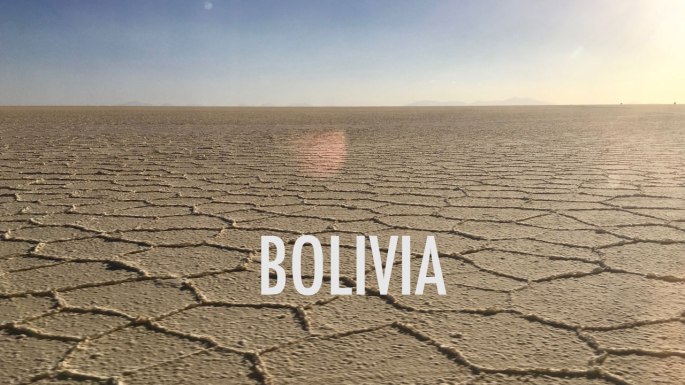
The afternoon began with a stop in the middle of nowhere allowing us our first proper photo opportunities. One of the most iconic things about the salt flats is the perspective photos you can take. Thankfully, our driver was extremely well versed in tourist-trap-photography and helped us take loads of photos together with our group (see below!). I think this was when we really got to appreciate the ludicrous vastness of the salt flats, it was just white salt hexagons like an intricate beehive, as far as the eye could see.

The main attraction in the afternoon was Incahause island. In the middle of the white salt flats, there is an island of fossilized coral covered in thousands of cacti which offers panoramic views across the Salar. The cacti can grow at 1cm every year and some were absolute giants, standing at over 13 metres tall!

The last stop of the day was on the edge of the Salar for a beautiful sunset. We stopped next to some man made salt piles; the salt is dug into piles weighing a ton each and left to dry in the sun before been transported to a refinery. As soon as the light starts to fade, you see all the 4×4’s rushing to get back to Uyuni and we were back in the town by 7pm allowing us plenty of time to grab dinner before our 9pm night bus journey onwards to La Paz.

Thanks for reading and join us next time!

Sophie & Dave

Sucre – Bolivia

Hello!

We left Paraguay on a flight from Asuncion to Sucre. Sucre is a small city situated at 2750m above sea level. We’d initially intended to only stay for 2 days but ended up staying 6 due to me not being able to acclimatise and having bad altitude sickness. It affects people differently, if it all. Dave was more or less fine apart from the occasional headache. Whereas for me, it felt like my brain was going to explode out my head, I had pins and needles in my hands, feet, knee caps that lasted for hours, nausea, weeing more than a pregnant lady expecting quintuplets, a bloody nose making it even harder to breathe and mainly extreme shortness of breath after doing anything, like walking from the bed to the shower. Needless to say, I was charming to be around. We went to the pharmacy and got Punacap, an over the counter anti-altitude sickness medication as well as drinking the local coca leaf tea every day.

Anyway, enough of my whining, altitude sickness is the real deal. Sucre had some amazing food in the modern town. We had two favourite places, on opposite ends of the price scale. Firstly, Condor Cafe, a not for profit vegetarian place that did a full set menu for B$25 (£3) and also the biggest cheese empanada you’ve ever seen for B$9 (£1). The restaurant, that also offers trekking tours, runs many projects supporting the local community such as funding two preschools with food and basic necessities. A very cheap place to eat with a good cause! On the other end of the spectrum, there was a restaurant called La Taverne, where I had the best steak I had ever had in my entire life. The food was incredible, and even that was only £9 for the most extravagant steak and drink! Sucre is also infamous for its chocolate so it would have been rude not to stop in one of the many chocolate parlours. We chose our own selection from a shop called Para Ti and subsequently scoffed the lot in one go as soon as we got back! Carbs and sugar boosts actually help with altitude sickness, it’s science…

Our first excursion (other than food trips) was to Museo del Tesoro, the museum of treasure! Within the entrance price, you get a guided tour in English which we had with just one other bloke, so practically a private tour! We learned about the rocks and precious stones found in Bolivia and how they are used in both the past and present culture. They showed us how silver is smelted at the side of the mountain using a really small device. We saw traditional Inca jewellery made from gold and saw the differences between 18kt and 24kt gold malleability. The star of the show was Bolivianite, a unique gemstone whereby yellow citrine and purple amethyst fuse together to produce a beautiful gradient effect. It is found in the nearby town of Potosi, only 40km from Sucre!

When I was finally feeling up to it, we headed to Parque Cretacico; a dinosaur park on the outskirts of the town. Getting there was an absolute palava. You can catch a local bus from the town centre (4 or H) for B$1.50, which we managed to navigate. The problem was when after only a few kilometers, the bus driver said “everybody off, the road’s closed”. We walked on to see empty buses, trucks, lorries and cars. We still aren’t sure actually what happened and why all the drivers just left but fortunately for us, there were three other French people on the bus trying to get to the park too. We managed to find a taxi and barter to pile in the 5 of us for B$15; the most useful time speaking French has ever come in! The park is based around the Cretaceous period, the last age of the dinosaurs in South America. Included in the ticket price of B$25, is a free guided tour (in English!). We started off by watching a terrible 80’s graphics production about the Cretaceous period, funnily enough lots of people got up and walked out, though we persevered. We then went on to to see their collection of sculptures, including the largest dinosaur sculpture replica in the world of a Titanosaurus; 36×18 metres! It was actually really impressive and helped to visualise the absurdity of their size rather than just reading measurements.

The main attraction of the park however, is the dinosaur footprints: the largest collection of preserved footprints in any one place in the world! And what’s even more mental is that the foot prints go up a vertical face of a dug out cement quarry. Millions of years ago, South America was flat but then tectonic plates collided and turned the flat landscape into a mountainous one, I mean, look at the Andes. Hence why the footprints went from horizontal to vertical. Whilst you can still see the footprints in a panorama sort of way from the main area, you can actually go all the way down to see them up close at either 12:00 or 13:00. They give you a hard hat and goggles (if you don’t have sunglasses) and you go down with a different tour guide, ours was brilliant and so enthusiastic. Our guide held up his plastic dinosaur toys as he animatedly discussed the main two group of dinosaur footprints we saw; Sauropods, identified by the round shape and Teropods, identified by the three toes. They can’t identify the exact species, only the group. It was a great day out, apart from the near death experience of walking back up the quarry in the altitude.

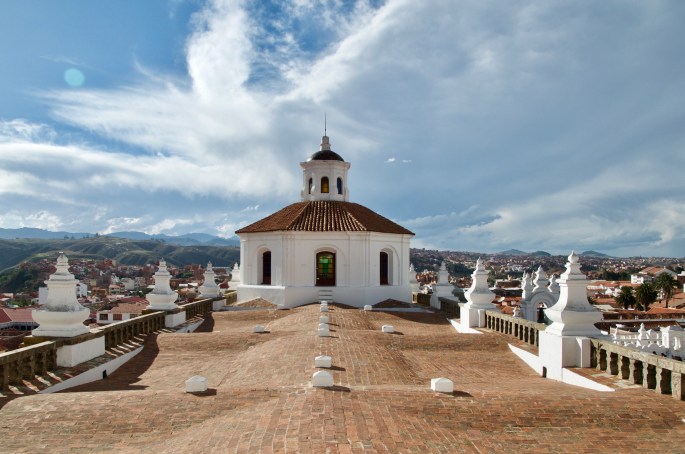
Our final visit in Sucre was to the Church of San Felipe Neri. It’s a functioning school by day, but between 2.30 and 5pm, they allow tourists to enter for a small fee of B$15. We had only known about it because Dave stumbled upon it on Tripadvisor. We weren’t really sure what to expect and as it is only 2 flights of stairs, we sort of thought that the views couldn’t be that good but wow did we eat our words. The roof offered the most spectacular views of Sucre by afternoon. Dave said it was a ‘hidden gem’ without realising his Sucre gemstone pun, *rolls eyes*.

Join us next time as we head to the iconic salt flats of Uyuni!

Sophie & Dave

Ep. 24 – Paraguay

Hello,

Our short video from our week in Paraguay, the country often skipped by people who are backpacking South America! We spent most of our time in the beautiful riverside town, Encarnacion & visited the nearby Jesuit ruins.

As always, don’t forget to watch in 1080p!

Thanks for watching,

Sophie & Dave

Jesuit ruins, Encarnacion, Paraguay

Ciudad del Este, Encarnacion & Asuncion – Paraguay

Hello!

So our first impression of Paraguay after going to Iguazu falls was of the border city with Brazil: Ciudad del Este. Now that first impression was definitely not a good one. Ciudad del Este is the second largest city in Paraguay yet it seemed only to be used as a place for Brazilians to cross the border and buy knock off and cheap tax free goods. When the Brazilians left, the city shut down. We saw so many people walking around with shotguns over their shoulders and in the short time we were out in this city, we saw 3 overt cases of child labour with kids no older than 12 doing shoe shining reminiscent of our time in India earlier this year. Needless to say we weren’t in the market for plasma screen TVs so we were very keen to leave the next day.

We had a week in Paraguay before flying to Bolivia and we both were thinking oh no, what have we done? Paraguay is awful. We headed to the bus terminal early, not knowing what to expect. I must say, so far, Paraguay is the one country this year where speaking Spanish is a necessity. Normally you can just google other people’s travel blogs to know which bus company to take, what the timetable is, the cost etc. But for Paraguay, there’s barely any information online. Arriving at the bus terminal was intense; instantly we were swarmed with bus ticket sellers yelling in all directions. This had never happened to us anywhere! I mean of course we’ve been hassled by vendors but never about legitimate transport tickets at a bus station. We tried to ignore the hassling and focus on looking at the bus company windows. It seemed most counters were just going to the capital, Asuncion. So I eventually asked and was pointed in the direction of the far right hand side of the station to a company called El Tigre. Fortunately there was a bus within the hour. Whilst we waited, we realised that we were the only tourists in the entire bus station. They do say Paraguay is not yet part of the ‘Gringo trail’ and this certainly seemed to reinforce that. We were unsure on what the bus standard would be. So far, South American buses have ranged between pleasant to extreme luxury but having seen the rickety old buses driving around Ciudad del Este, our hopes weren’t high. However we were pleasantly surprised as it turned out to be a double decker tourist style bus with a toilet. It was just very dirty and freezing cold given all the air con vents were broken but it cost us G$50,000 (£6) for the 6 hour trip. Mental maths of changing Paraguyan Guaranis to Pounds was great fun; G$7400 to £1.

So anyway, about us saying Paraguay was awful, turns out that was a load of rubbish. We really disliked Ciudad del Este but Encarnacion was like a different country! Encarnacion is a 400 year old city built along the river front that lies between Paraguay and Argentina. It was quite surreal being able to look out across the river and see the city skyline of a different country (Posadas, Argentina). There was a spectacular sunset looking out in that direction practically every night we were there, we also had the same beautiful view from our hotel room. Though there aren’t really tourist attractions “to do” here, we really enjoyed it just because it was such a relaxed place. We had only booked 2 nights initially but ended up staying 4. The main thing to do in Encarnacion is simply to take the time to stroll along the river front where there was a little beach called Playa San Jose, it reminded us quite a lot of the promenade walk, La Rambla, in Montevideo. By day, we didn’t see many people in the streets of Encarnacion, but in the evenings, the board walk came alive with groups of traditional maté tea drinkers sitting on benches and chatting. There wasn’t that many food options, especially on a Sunday, and Dave was distraught to have to resort to eating McDonald’s. However, we did find one amazing restaurant; Hiroshima, a really reasonably priced Japanese place. We got boat loads of sushi, literally, they served them in little boats.

One day we decided to visit the Jesuit Ruins in Trinidad, on the outskirts of Encarnacion. In the 18th century, Spain and the Catholic church, believed that the religious movement of the Jesuits was becoming too powerful and thus they were expelled from Paraguay leaving their establishments abandoned. The weather was really hot and while it was only a short 30 minute bus ride out of town, unfortunately the bus didn’t depart on schedule and waited for other passengers to hop on board until it was virtually full. This would have been fine apart from it was like a sauna on board and both of us, while dripping in sweat, were seriously doubting whether it was even worth going. Apparently the ruins are one of the least visited UNESCO world heritage sites in the world; and if I am honest I can’t say I am surprised. While they obviously hold historical importance, when you compare them to other ruins, such as the temples of Angkor, they really aren’t that impressive to the eye. However, it was quite nice to be the only ones there and potter round the grounds independently and have a picnic under the shade of a tree. There are more ruins located 12km from the main highway in Jesus de Tavarangue. However, transport options are severely limited and neither of us fancied walking in the midday heat so we decided to give them a miss and catch the bus back to Encarnacion.

One of the main reasons we stayed for 4 days in Encarnacion was because when we were researching Asuncion, the capital, the top thing to do was to visit a shopping centre… On our travels so far we’ve realised that we usually much prefer the smaller cities to the capitals. We used the same bus company, El Tigre, for the 7 hour journey, though this bus had the opposite problem of no air con working so we were sweltering. We finally arrived and were quite glad we chose to spend most of our time in Encarnacion. We used our only day in Asuncion to catch up on laundry, very exciting. When it was time to head to the airport for our flight, we asked the hostel to help us book a taxi but they reassured us that the bus was really easy, picking us up outside the hostel and dropping us at the departures entrance. We are usually all for buses unless heading for a flight but as it was G$3,000 instead of G$100,000, we opted for the bus. The guy from the hostel even put us on what he said was the correct bus. Turns out it wasn’t the right bus! It should have only taken 40 minutes but after an hour, we were concerned. I asked a lady on the bus and she said we were on the wrong bus! We jumped off and managed to get in a taxi and go back on ourselves to the airport. We were livid but we made our flight in time and all was okay.

Join us next time as we head to Bolivia!

Sophie & Dave


Ep.23 – Iguazu Falls

Hola!

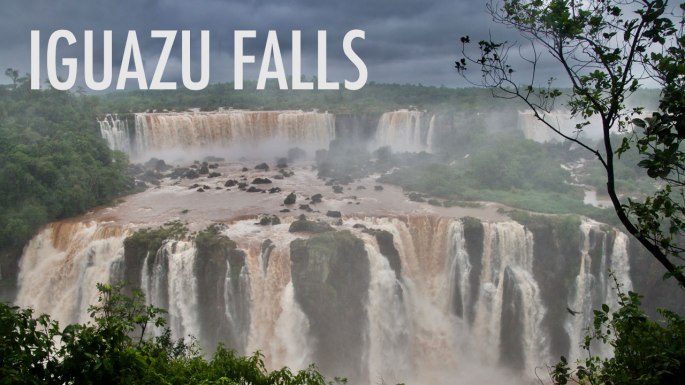
Our travel video from the spectacular Iguazu Falls. One of the 7 natural wonders of the world, it was truly mesmerising. We went after heavy rainfall so the water ran brown rather than clear as a result of the movement in sediment. Still, we hope you enjoy and don’t forget to watch in 1080hp!

Sophie & Dave

Iguazu Falls – Argentina, Brazil & Paraguay

Hello!

We flew from Rio on an internal flight to Foz do Iguacu. Iguazu/Iguaçu falls was high up on our bucket list. It’s considered one of the natural 7 wonders of the world; spans 2 countries, has 257 individual waterfalls, comprises a width of 2,700 metres, and has an iconic waterfall called The Devil’s throat with an 80 metre drop! While we were fully aware that the area was renowned for its tropical weather, no one could have prepared us for the thunderstorms and rain that greeted us on arrival. We were literally wading through water on the streets. Fortunately, our year trip allows us flexibility so we ended up jumping between Brazil, Argentina and Paraguay for about a week! Our planning was a little tricky as we were amazed how little information of bus timetables/prices there was online. (We took photos of the bus timetables and put them at the end of this post in the practical info section for any future travellers).

We got the bus to the Argentinean side of the falls with the intention of going back to the Brazilian side later. They say you should allow 7 hours for the Argentinian side as there are various circuits and viewpoints to fully admire the surroundings. Therefore, we arrived too late so we visited the Triple Frontier instead where the border of Argentina, Paraguay and Brazil meet and where the Iguazu and Parana rivers converge.

Puerto Iguaçu, Cataratas de Iguaçu – Argentinian side
The following day we caught a bus early from the main bus terminal in Puerto Iguaçu to the falls (see practical information for more info). The entrance to the park costs $500ARS pp and annoyingly, after withdrawing money the previous day, they had a card machine at the till!

There are three main walking circuits; lower circuit (1.4km’s), upper circuit (1.75km’s) and the Devil’s throat (1.1km’s). We decided to embark on the lower circuit first, partly as all the tour groups seemed to be heading for the upper circuit, but also as we were both in agreement that waterfalls tend to look more impressive from the bottom up. We had both read about the various animals you can expect to see at the falls, including jaguars (although incredibly rare), and shortly into our walk spotted two toucans nestling in the trees, along with several Coatis which are sort of racoon/anteater/badgers. There are warnings throughout the park not to feed or approach the coati’s as they have a nasty bite and carry rabies. However, on the contrary to what we had read, they seemed incredibly docile and tolerant of annoying people harassing them. Along the way, we got our first glimpse of the spectacular falls. Unfortunately, due to the heavy rain earlier in the week, the water was a dark brown colour although the sheer volume and velocity of the falls still made it such an impressive sight.

We then caught the train (price included within the entrance to the park) up to the Devil’s throat. The walkway takes you right to the mouth of the waterfall where the falls drop 80 metres. Every time the wind blew, we got absolutely soaked! From here we were easily able to see the Brazilian side a short distance across the falls. We stopped for a picnic on the benches before catching the train back down towards the beginning of the upper circuit. It was at this point that some kind of insect stung me on my arm, leaving me in (no exaggeration) excruciating pain. Dave pulled out the sting, shook off his hand and stupidly went back to eating his sandwich without checking if it had actually fallen off. It must have still been on his hand as it pierced his lip and he proclaimed he would rather be kicked in the balls than stung by whatever that insect was. And he didn’t even get the full sting! We didn’t see what it was but it must have been some kind of Brazilian wasp.

After catching the train back down we then did the Upper circuit which gave a slightly different perspective from what we had seen earlier in the day.  Overall, we felt it was definitely worth it to complete all three circuits given the different view points and chances to see wildlife and rainbows in the mist! There is also the option to do a boat tour for $900ARS. However, as I was still in pain from the insect sting and both of us were quite tired by this stage, we decided to leave it until the Brazilian side. In hindsight, definitely do it on the Argentinean side if you get a chance as we later found out that the cost of the boat tour on the Brazilian side was over double!

We decided to get the bus across to Ciudad del Este and then head back on ourselves to tick off the Brazilian side of the falls. The bus ticket to Ciudad del Este cost $40ARS (£2), a bargain when you consider it crosses three borders as there is no bridge between Argentina and Paraguay so you have to drive through Brazil. The bus only stopped to stamp us out of Argentina and not at all in Brazil. We were hoping to jump off at the Paraguayan border and get our entry stamp. However, the bus didn’t stop there either – probably the most lax border control we have ever encountered! We dropped our bags off at our hotel and were feeling a little concerned that we had technically entered the country illegally, so we walked back across the bridge to Brazil and then re-entered as legal immigrants.

Foz do Iguazu – Brazilian side
After our first border crossing by foot, we continued walking onto the main bus terminal on the Brazil side. From here you can catch the 120 bus to Parque Nacional for $3.45BRL (see the bus timetable below). The falls are the last stop so you really can’t go wrong. The entrance to the park costs $64BRL and this includes a return coach transfer to where the walkway begins. The Brazilian side gives a completely different perspective, you are further away from the falls and higher up giving a much wider view. Unfortunately, our luck with the weather had run out and it was spitting throughout our visit. The walkway along the canyon is fairly short, finishing with a walkway out onto the lower basin of the Devil’s throat. There are several stop off points along the way but it seemed much more congested and crowded than what we had encountered on the Argentinean side. We went through the Brazilian side much quicker than the Argentinian, half a day to complete and admire the walkways on the Brazilian side was more than enough.


Practical information – Prices & Bus timetables for Iguaçu falls  October 2017

  • Puerto Iguaçu (Argentina) to Ciudad del Este (Paraguay) –
    $40ARS, 1 hour and a half, bus only stopped to stamp out of Argentina
  • Foz do Iguazu (Brazil bus station) to the waterfalls: 120 bus to Parque Nacional for $3.45BRL, 40 minutes
  • Puerto Iguaçu (Argentina) to the waterfalls [Cataratas], return ticket costs $150ARS, 35 minutes


Thanks for reading, join just next time as we head to Paraguay!

Sophie & Dave